
Chambers County Court Records After a Jail Arrest
Court records after a jail arrest in Chambers County start with the custody event: the arresting agency, booking at the Chambers County Detention Facility, and the first jail record created after intake. The county detention page says the jail houses people arrested by the sheriff's office and municipal police departments in LaFayette, Lanett, and Valley. That local fact matters because a city arrest may still lead to county jail booking. Once a person is booked, the early jail charge is only the arrest or booking side of the case.
The court side begins when the prosecutor decides what formal charge should move forward. The Chambers County District Attorney represents the county and Alabama in criminal matters, advocates for victims, and operates a pretrial diversion program for first offenders. Filed charges are then tracked by the courts through the Chambers County Circuit Clerk, not by the jail. For current custody details, use Chambers County jail inmate records. For booking photos, use Chambers County jail mugshots.
How to Find Chambers County Court Records After an Arrest
The Chambers County Circuit Clerk is the official record keeper for Circuit Criminal, District Criminal, traffic, sheriff's department cases, and city cases from Valley, Lanett, and LaFayette. The clerk profile points the public to Alabama Just One Look for most Alabama trial court information, with required fees. The clerk remains the right local office for copies, older files, certified records, sealed questions, and cases that are too new or too restricted for an online result.
- Confirm the booking date, arresting agency, and name spelling through the jail roster or detention facility phone line.
- Search Just One Look, or contact the Chambers Circuit Clerk, using the defendant name or case number.
- Check whether the case is District Criminal, Circuit Criminal, traffic, or a city-origin case from LaFayette, Lanett, or Valley.
- Read each charge, case action summary, warrant copy, indictment, judgment, and disposition separately because one arrest can produce more than one court entry.
The local copy request path is the court-copy and search request form. It asks for the defendant name, charge, case number, date of birth, civil or criminal category, requested record type, and certification choice. The form says to allow at least 7 working days and lists fees, but it appears to carry Lee County footer language despite being hosted on the Chambers court site. Call the Chambers clerk before mailing payment or relying on the printed mailing address.
| Field | Type | Required | Use in Arrest Record Search |
|---|---|---|---|
| Defendant | Name | Yes if no case number | Use full legal name and any known spelling variants. |
| Charge | Text | No | Helps the clerk match an arrest to a filed case. |
| Case number | Identifier | No | Best field when the jail, bond paper, or court notice lists one. |
| Date of birth | Date | No | Useful when several people share the same name. |
| Record choice | Selection | Yes | Examples include warrant copy, indictment, judgment, history check, or case action summary. |
Chambers Charging Documents
A booking charge can be a clue, but the charge record comes from a filed document. In Chambers County, a warrant case may start with an incident report to the sheriff or the police department for LaFayette, Lanett, or Valley, followed by a magistrate's probable-cause review. Felony matters may later involve grand jury action. The exact file path depends on the offense, court division, and prosecutor decision.
| Document | Who Starts It | Common Use | What to Request |
|---|---|---|---|
| Complaint | Complainant, officer, magistrate, or prosecutor process | Misdemeanor, traffic, warrant, or early felony process | Complaint, deposition, or warrant copy after service. |
| Information | Prosecutor | Formal charge filed by the district attorney in eligible cases | Filed charging instrument and case action summary. |
| Indictment | Grand jury | Felony prosecution after grand jury review | Indictment and later docket entries. |
The clerk request form specifically includes indictment, warrant copy, judgment, and case action summary as record choices. Those choices are useful after an arrest because they show more than a roster entry. The case action summary is often the most useful starting copy because it lists the chronological court history, including hearings, bond events, amendments, pleas, dismissals, and disposition entries when public.
The Chambers clerk records page is an appropriate source for the local court-record channel.
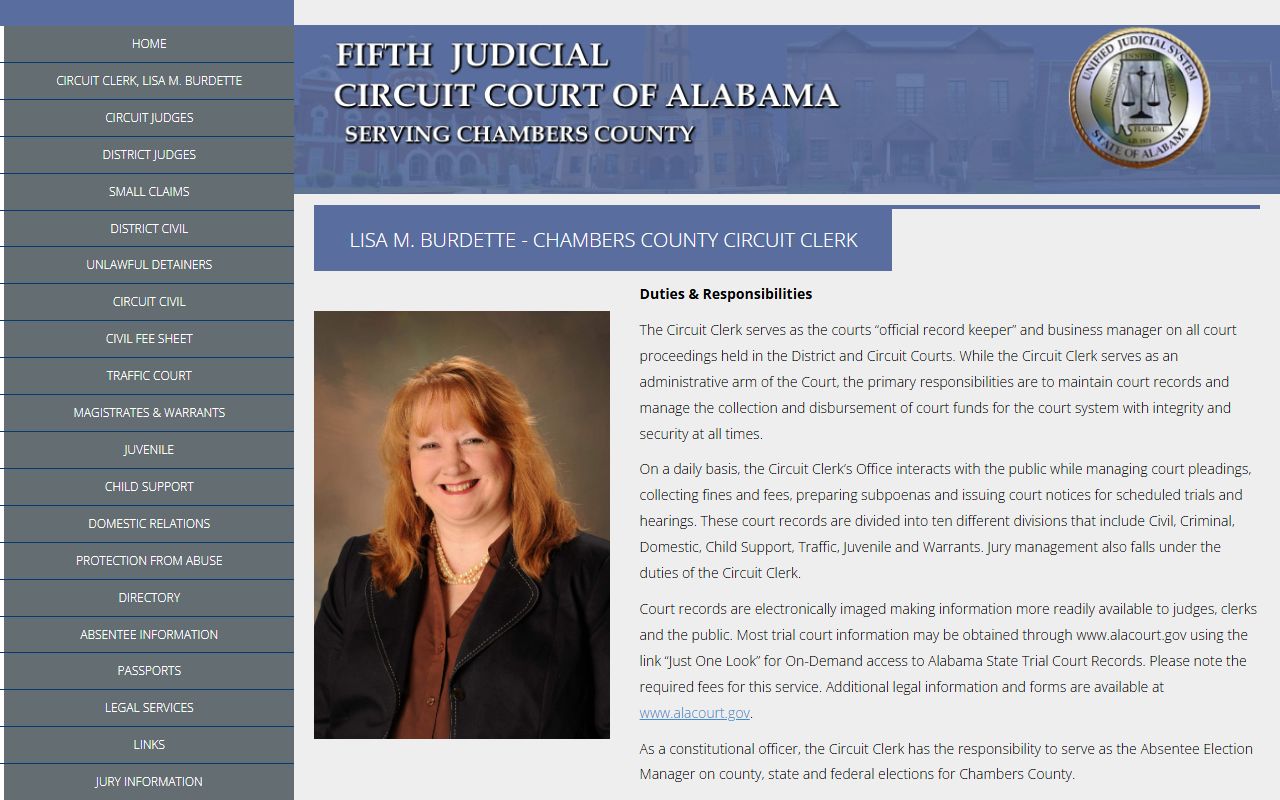
That clerk access point is where a booking event becomes a searchable court-file question.
Chambers Arrest Charge Status
Charges after arrest can change. A jail roster may show the offense named at intake, while the court case may show an amended, reduced, added, dismissed, or no-billed charge later. The prosecutor can also route a first-offender case toward pretrial diversion. A bond amount, arrest entry, or filed case does not prove guilt. It only marks a stage in the criminal process.
| Status | Meaning | Chambers County Search Note |
|---|---|---|
| Pending | The filed charge remains unresolved. | Check the case action summary for the next court date or bond entry. |
| Amended | The charge was changed after filing. | Compare the original booking charge with later court entries. |
| Reduced | The charge changed to a less serious offense. | Disposition or plea records may explain the change. |
| Dismissed | The charge ended without conviction. | A public record may still exist unless expunged or restricted. |
| Nolle prossed | The prosecutor declined to keep pursuing the charge. | Use the clerk and expungement materials for later access questions. |
| No-billed | The grand jury did not indict. | Ask the clerk what entries remain public before requesting copies. |
Chambers Arrest Bond
Chambers County did not publish a jail-specific bond posting guide in the official sources reviewed. Bond questions should start with the detention facility, then move to the clerk or the court paperwork for case details. The local traffic court page adds one concrete pathway from court to custody: failure to pay or dispose of a citation and failure to appear may lead to an arrest warrant, license suspension by ALEA, increased fine, and bond forfeiture.
| Bond Type | How It Works | Local Caution |
|---|---|---|
| Cash bond | The full amount is paid to secure appearance. | Payment channel was not published; verify with jail or clerk. |
| Surety bond | A bonding company posts bond for a fee. | Confirm defendant name, case, jail location, and holds first. |
| Property bond | Property secures the court appearance obligation. | Local availability was not found in official sources. |
| PR bond | Release is based on a promise and court conditions. | Depends on judge, charge, history, and case posture. |
| No-bond hold | Release is blocked by the charge or another agency hold. | Ask whether a detainer, probation, federal, ICE, or other hold exists. |
Chambers Arrest Warrants
The Chambers magistrates and warrants page explains the local warrant process. A complainant first files an incident or offense report with the Chambers County Sheriff's Department, or with the police department in LaFayette, Lanett, or Valley if the offense occurred in a municipality. The person must tell the officer or deputy they wish to proceed with a warrant, then appear before a clerk or magistrate for questions under oath. The magistrate decides whether probable cause exists.
No complete official web warrant search was found. The warrant page says an arrest warrant is not a public record until served, and anyone who suspects a warrant must appear in person at the sheriff's department or the relevant city police department. The county sheriff app advertises most-wanted photos, but that is not the same as a complete warrant list. After a warrant is served and the person is booked, the custody side belongs with the jail and the court side belongs with the clerk.
The Chambers warrants page is the direct source for local warrant limits and the probable-cause process.
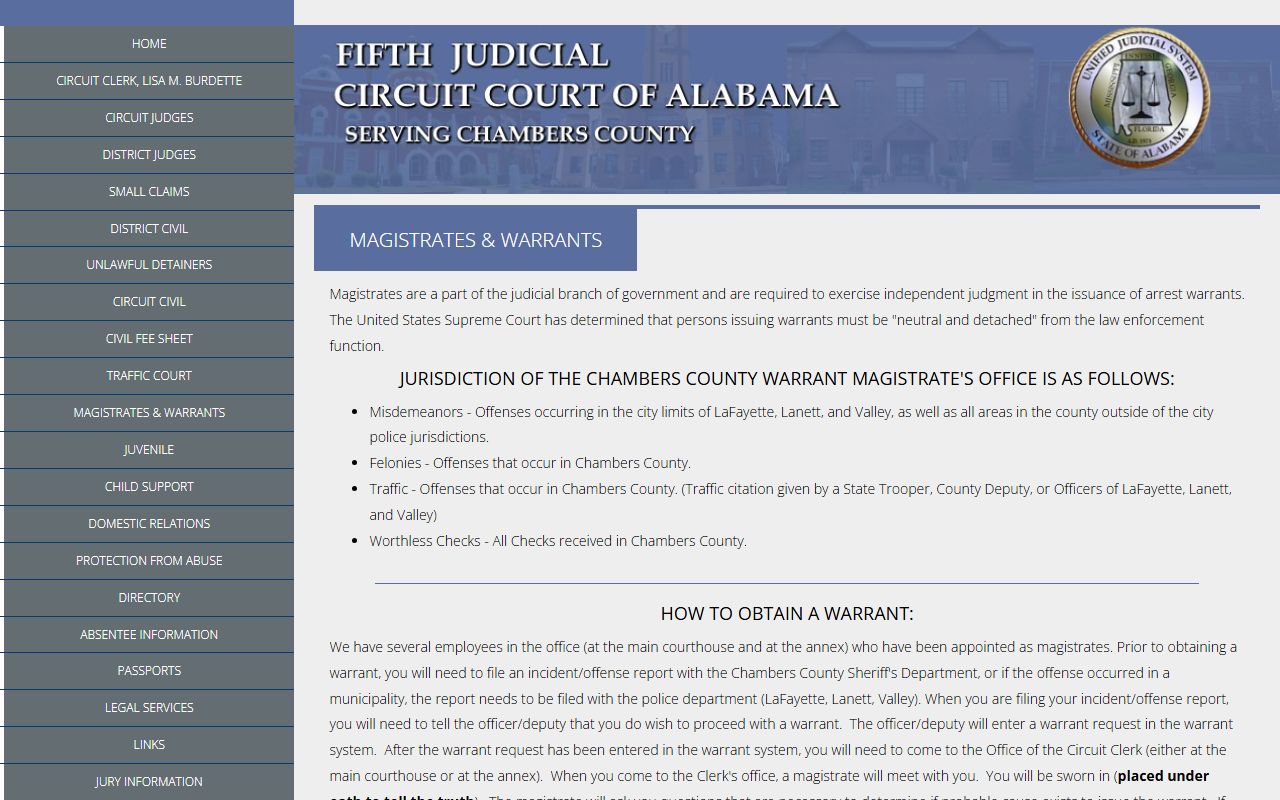
That public-record limit explains why some warrant information appears only after service and booking.
Arrest Charges vs Convictions
Chambers County arrest records and court charges should not be read as final outcomes. A charge is an accusation or filed count. A conviction follows a guilty plea, verdict, or other final adjudication. The difference affects how records are used, how expungement is reviewed, and how a person should verify the case before relying on it.
| Point | Charge | Conviction |
|---|---|---|
| Stage | Arrest, complaint, information, indictment, or amended filing. | Final outcome after plea, verdict, or qualifying judgment. |
| Meaning | An allegation that must still be proved or resolved. | A legal finding or accepted plea. |
| Record source | Jail roster may show booking charge; clerk shows filed charge. | Clerk judgment, disposition, or case action summary. |
| Use caution | Can be dismissed, reduced, no-billed, or diverted. | Can still require context such as sentence, appeal, or expungement order. |
Sealed or Expunged
Alabama public-record law allows access to many public writings, but criminal records have limits. Code of Alabama section 36-12-40 covers inspection of public writings, and section 36-12-41 covers copies when the requester has a right to inspect and pays a proper fee. Law-enforcement investigative material can be restricted under section 12-21-3.1. Juvenile court records are confidential under section 12-15-133.
| Record Limit | Sealed | Expunged |
|---|---|---|
| Public visibility | Hidden or restricted from ordinary public access. | Removed from public access under an eligible court order. |
| Alabama fit | May apply through court confidentiality, juvenile rules, or a specific order. | Eligibility is tied to statutes such as sections 15-27-1 and 15-27-2. |
| Records affected | May limit copies or online display. | Can restrict arrest, charge, and court history when granted. |
| Where to verify | Ask the clerk what order or law controls access. | Use the Chambers expungement page and clerk process. |
The Chambers expungement page discusses misdemeanor, violation, traffic, municipal, nonviolent felony, dismissed, no-billed, acquitted, nolle prossed, and pardon-related pathways. Eligibility is fact-specific. A dismissed or no-billed case should not be treated as erased unless a court has entered an expungement or other access-limiting order.
The Chambers expungement page is the local source for access changes after a qualifying outcome.
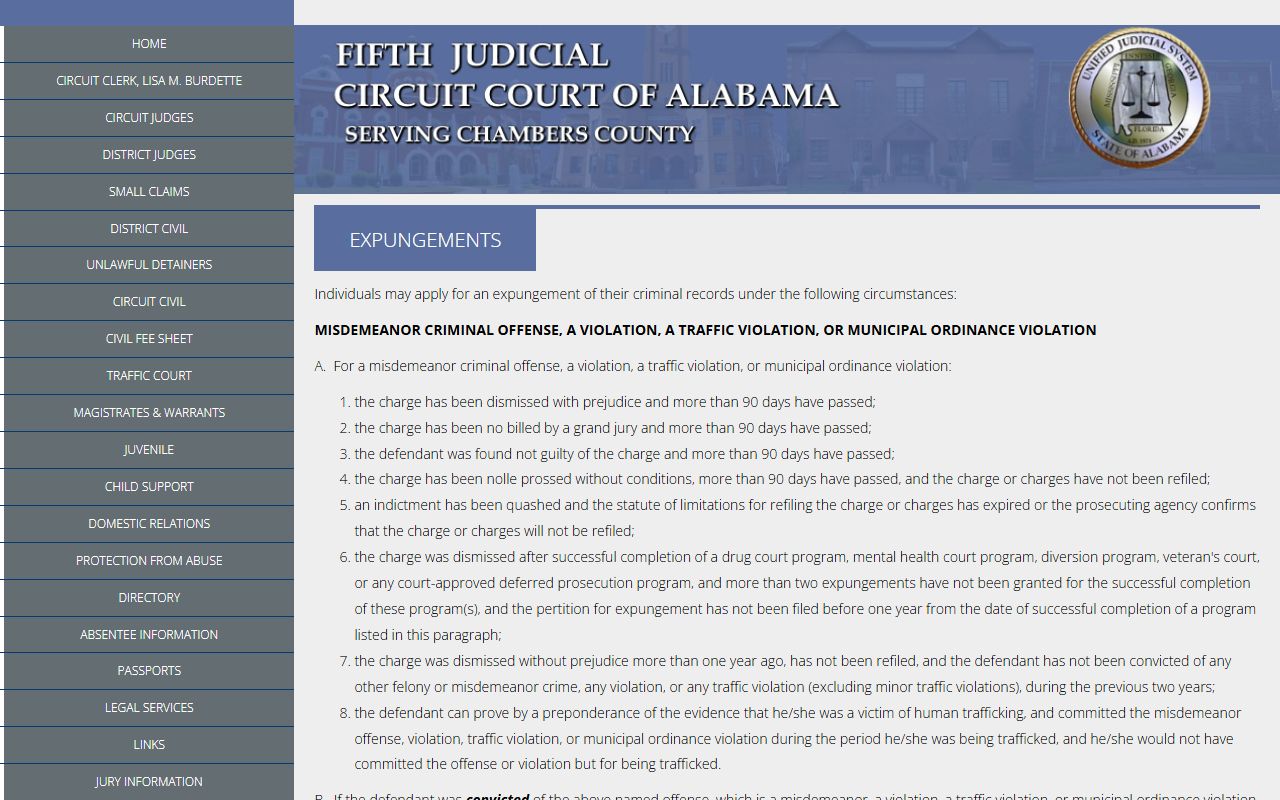
That court resource is the better place to verify access limits than the jail roster.
Restricted Court Records After an Arrest in Chambers County
Some Chambers County court records after an arrest are not available through ordinary public lookup. Juvenile records are confidential, and the Chambers juvenile page says copy requests require in-person proof of identity and party status. Unserved arrest warrants are not public records under the local warrant instructions. Ongoing investigative files may also be restricted, even when a basic booking or court record is public. Older paper files, certified copies, and closed records may require clerk action and a search fee.
State prison and federal custody are separate systems. After a Chambers County sentence to state prison, search the Alabama Department of Corrections inmate search, not the county roster. Federal prisoners are searched through the BOP inmate locator, and immigration detention uses ICE ODLS. Those locators do not replace the Chambers court record, but they can explain why a person no longer appears in the county jail.
Important: Arrest records and charge records are not consumer reports and should be verified with the court or agency that created them.